
Material and Process Improvement
Start with mixing, adhesion or curing issues and review material/process inputs
Equipment configuration and manufacturing support
Discuss the configuration against your product and site requirements.
Discuss this requirement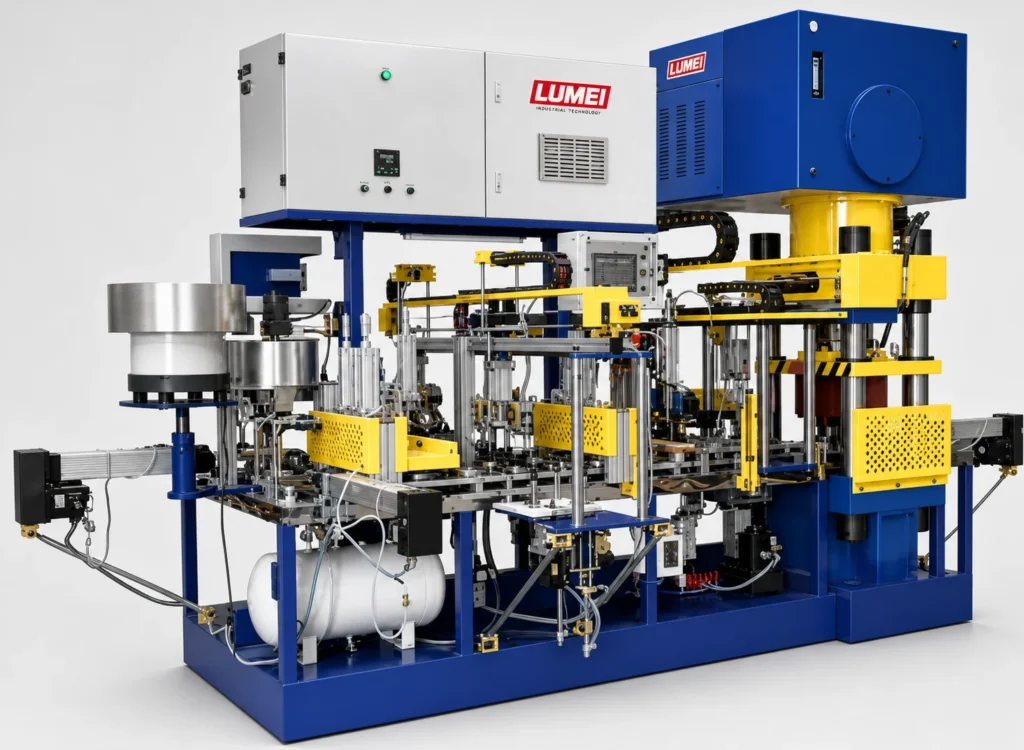
Application scenario
Scenario setting: Kenya; Kavorin Abrasives. The company name, location, and business background are fictional. This is an illustrative application scenario, not a verified customer project.
Overview
In this scenario, a Kenyan cutting disc manufacturer wants to improve coordination between its existing forming machines and mixing, stacking, curing, and packaging operations. Shift records and equipment interface checks guide a staged upgrade that can be scheduled around existing orders.
Business Background and Production Requirements
Kavorin Abrasives, the fictional company in this scenario, produces several cutting disc sizes. Its order mix combines larger distributor replenishment batches with smaller runs requiring specification changes.
The upgrade starts with retaining forming machines that remain suitable for use, then investigating why they sometimes wait for material while unfinished batches accumulate downstream. Management wants to identify the actual constraint before selecting auxiliary equipment.
The review uses shift records covering regular production and changeovers. These distinguish mixture supply, fixture return, oven loading, and release to packaging. Where records point to feeding delays, mixing and screening are reviewed first. Where delays follow demolding, the stacking interface and fixture turnaround take priority. Each stage retains comparable before-and-after records to inform the next decision. No staffing levels, measured output, or improvement percentages are assigned to this fictional factory.
Equipment Options
LUMEI's available equipment includes hydraulic tilting mixers, secondary mixers, vibrating screens, automatic disc placing or stacking equipment, hot-air circulation curing ovens, and shrink-wrapping equipment.
Mixer size, stacking arrangements, and curing equipment must be selected for the existing products and interfaces. The full auxiliary equipment range should not be treated as a universal retrofit package for every line.
Selecting the Upgrade from Production Records
If the forming machine frequently waits for mixture, review mixing batches, screening, and material supply. If delays occur after demolding, check product receiving arrangements and fixture turnaround. If batches accumulate before curing, review oven schedules, loading and unloading, and fixture return.
If queues occur in packaging, check packaging changes and the release pattern from upstream processes. These are assessment routes; actual site records determine the final upgrade scope.
Confirming Equipment Interfaces
After selecting a mixer, stacking machine, or downstream unit, check inlet and outlet heights, product receiving positions, fixture dimensions, available space, and power requirements.
Where equipment is linked to an existing machine, confirm control signals, start and stop relationships, and the response to abnormal conditions. The technical teams should agree responsibility for each interface. If reliable linked operation is not feasible, the configuration should explicitly identify manual transfer or independent operation.
Implementing and Checking Each Stage
Begin with one confirmed bottleneck and complete the equipment connection within an agreed installation window. Follow individual machine commissioning with checks of the connected process.
For before-and-after comparisons, use the same product specification, comparable batch sizes, and consistent measurement definitions wherever possible. Record productive machine running time, reasons for waiting, and downstream queues. If the improvement is unclear, review the bottleneck assessment and interfaces before committing to the next equipment purchase.
Practical Handover and Training
Handover should cover operating steps, cleaning requirements, routine maintenance points, and issue reporting. Training should use actual equipment operations to confirm that personnel can manage feeding, specification changes, and restart checks after a shutdown.
Telephone, video, and online remote support can assist with subsequent questions. On-site installation, commissioning, engineer services, and travel costs are subject to the agreed scope and commercial terms.
Where This Approach Fits
This approach helps manufacturers define the purpose and sequence of an upgrade before purchasing equipment. Results can then be assessed using comparable product and shift records, rather than inferred from the level of automation alone.
Service Arrangements
LUMEI can provide on-site installation and commissioning, together with telephone, video, and online remote support. Service scope, site arrangements, and charges are confirmed by agreement.
Request an Existing Line Upgrade Review
Send your main and auxiliary equipment lists, product specifications, continuous production video, factory layout, and shift records showing waiting time or accumulating batches. LUMEI can review the relevant process interfaces and equipment options to develop a staged upgrade scope.
Tell us about your manufacturing requirements
Discuss equipment, materials, process and delivery scope.
Submit project requirements →