
100–125 Grinding Disc Capacity Planning
Review documented 100–125 flip configurations without assuming factory additions or improvement percentages
Equipment configuration and manufacturing support
Discuss the configuration against your product and site requirements.
Discuss this requirement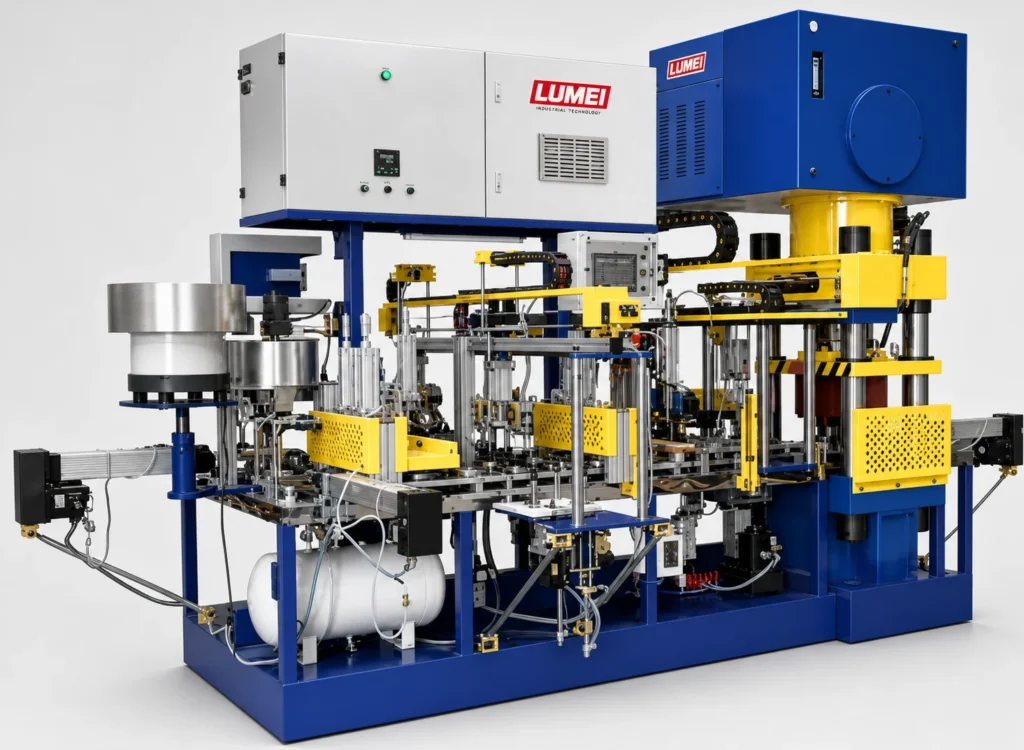
Application scenario
Scenario setting: Egypt; Neravo Abrasives. The company name, location, and business background are fictional. This is an illustrative application scenario, not a verified customer project.
Overview
In this scenario, an Egyptian factory with an established small cutting disc range plans to add 100–125 mm grinding discs. The expansion centers on a forming machine with flipping stations and a review of the compatibility and available operating time of existing mixing, curing, and packaging equipment.
Business Background and Production Requirements
Neravo Abrasives, the fictional company in this scenario, produces small resin-bonded cutting discs and wants to supply 100–125 mm grinding discs through its existing distribution channels.
Existing cutting disc orders still need production time. The manufacturer therefore plans to add grinding disc forming equipment while assessing whether its mixers and curing ovens can be reused. The purchasing decision must account for new-product trials, equipment connections, and ongoing orders.
The expansion begins with one target grinding disc structure and a defined list of molds, reinforcing meshes, and handling fixtures. Each existing equipment item is assessed for continued use, use after modification, or replacement with a new item. Trial batches remain separate from regular orders. If shared oven or mixing schedules cannot accommodate both, the production plan or supporting equipment must be reassessed. Commissioning, training personnel, and remote communication arrangements are agreed before implementation; downtime is confirmed against actual site conditions.
Equipment Configuration
LUMEI's existing 68- and 54-station line proposal includes a 54-station, 125 t single-head forming machine with flipping stations that can be evaluated for this expansion.
It covers 100–125 mm cutting and grinding discs. The configuration includes three volumetric feeding stages, three mesh placement units, four material leveling stations, two flipping units, pre-pressing, and two infrared mesh detection positions. Active stations and molds must be confirmed against the intended grinding disc structure.
Assessing Existing Equipment for Reuse
Start with the current mixing schedule, oven cycles, stacking method, and fixture dimensions. For each supporting item, state whether it can remain in use, requires modification, or needs to be added, together with the conditions for that decision.
Existing packaging equipment must also be checked against the new grinding disc dimensions and packing format. Similar equipment names alone do not establish compatibility; product requirements and interfaces need to be checked before an item is included in the expanded configuration.
Setting Up the Forming Sequence
The 54-station, 125 t machine provides volumetric feeding, mesh placement, flipping, and pre-pressing functions. For the target grinding disc, use the product drawing to confirm active stations, molds, and feed settings.
Available stations do not imply that every product uses the same sequence. Initial trials should verify that mesh placement, feeding, and flipping match the intended structure, then establish a setup record for that specification.
Coordinating Installation with Current Production
Check equipment access, maintenance space, and utility connections before delivery and installation. Work involving shared utilities should be scheduled within an agreed shutdown window, followed by checks before existing production resumes.
Identify trial areas and regular production batches separately. Maintain distinct forming, curing, inspection, and packaging records for the new product so that additional demands on shared equipment can be assessed.
Moving from Trials to Regular Scheduling
Confirm the process sequence and inspection results for one target specification before adding sizes or increasing batch volume. Review the new grinding disc records alongside waiting time affecting existing cutting disc orders.
If shared mixing or curing becomes a constraint, revise the schedule or assess additional supporting equipment. A successful expansion requires repeatable product production and coordinated processes, beyond the ability of the new machine to run on its own.
Where This Configuration Fits
This approach suits a manufacturer adding products gradually while working within an existing factory. It separates new forming equipment, reusable supporting equipment, and modifications into a clear purchasing and installation scope.
Reference Output and Configuration Limits
The 54-station forming machine has a reference output of 500–600 discs per hour. This does not establish that a particular grinding disc expansion will achieve that rate. Reuse decisions, additional equipment quantities, and trial performance must be confirmed for the individual factory.
Request a Grinding Disc Expansion Review
Provide the target grinding disc structure, an existing equipment list, current production schedules, and the factory layout. LUMEI can assess the new forming machine, reusable equipment, and additional tooling separately to help define the purchasing and site connection scope.
Tell us about your manufacturing requirements
Discuss equipment, materials, process and delivery scope.
Submit project requirements →