 EN












When resin-bonded grinding wheels and cutting discs enter a curing oven, operators usually check the display first: has the temperature reached the setpoint, and is the program running as planned?
During a trial run for acceptance, another question also needs an answer: have products at different positions undergone a temperature profile that meets the process requirements?
This requires matching controller records with the loading layout, actual temperature measurements and inspection after unloading. For a business selecting an oven or adjusting its process, these records are more informative than a single reading indicating that temperature has been reached.
1. Identify what is being measured before reading the temperature
What a temperature curve can tell you depends on where the sensor is placed.
A control-point record shows temperature changes at that location inside the oven. A sensor on a product helps describe heating at that specific part of the product. The two records may show different heat-up times and cannot simply replace each other.
Before the trial, mark measurement points on the loading layout and specify whether each measures oven air, a product surface or another defined location. Then check the sensors and recorder for suitable temperature ranges, calibration status and measurement accuracy.
Also document sensor positions and attachment methods. Otherwise, differences between two trial curves may be difficult to attribute to production conditions or changes in measurement setup.
2. Turn temperature accuracy into specific requirements
Temperature accuracy in equipment literature can be misread as meaning that every part of the oven reaches the same thermal condition. Discuss the following items separately:
| Question | What to check |
|---|---|
| Are displayed values reliable? | Measurement system accuracy and calibration |
| Is temperature stable at one location? | Temperature fluctuations at that point over a defined period |
| Are temperatures similar across locations? | Differences between measurement points in the agreed working space |
| Has the product undergone the required temperature profile? | Representative product measurements compared with process requirements |
These items serve different inspection purposes and cannot be summarized by one number.
When a supplier states temperature uniformity, also ask for the test temperature, sensor layout, stabilization conditions and whether the test was conducted empty or loaded. Equipment comparisons are meaningful only when these conditions are clear.
3. Keep the loading layout as part of the trial conditions
Changing product quantity, rack positions or support-plate arrangements in the same oven may change the paths taken by hot air through the load.
A trial record should therefore show more than the number of discs loaded. It should allow the arrangement to be reconstructed, including product specifications, individual weight, quantity per layer, layer spacing and support methods.
Use a loading diagram together with site photographs to locate products, racks and measurement points. If an abnormal result appears later, these records help establish whether the loading conditions changed.
If the trial uses a smaller load but production will add layers or change the arrangement, assess whether further validation is needed. Fitting products inside the chamber does not establish that the layout meets the process requirements.
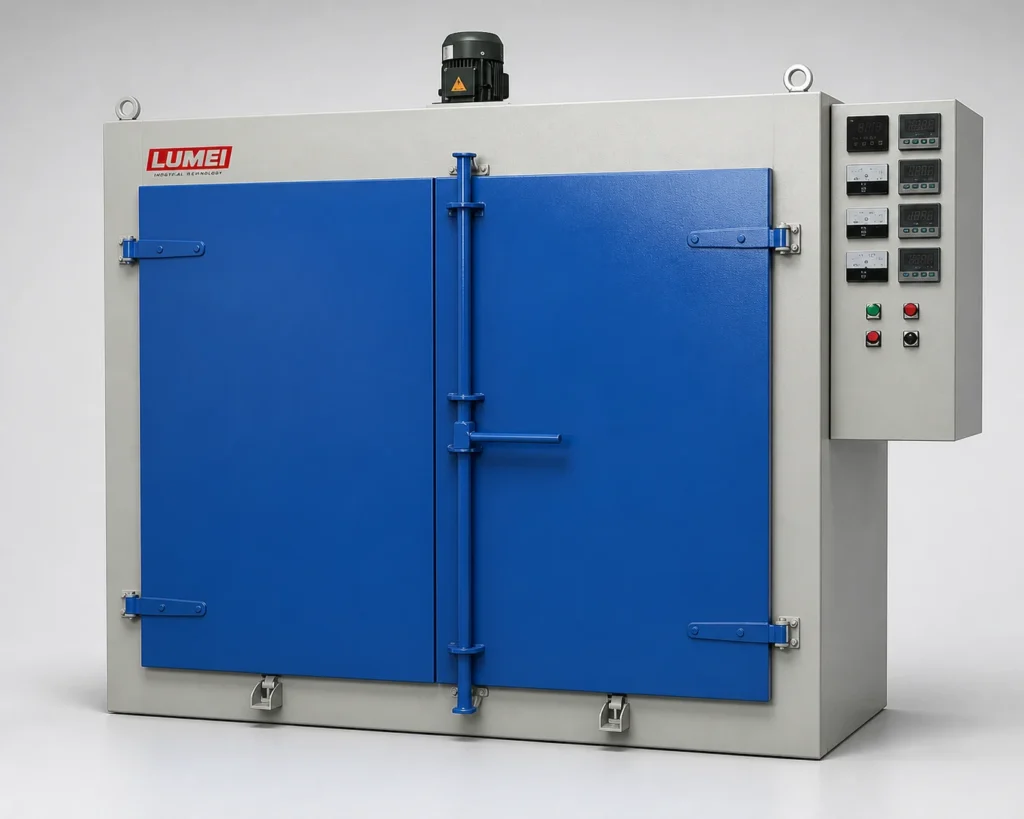
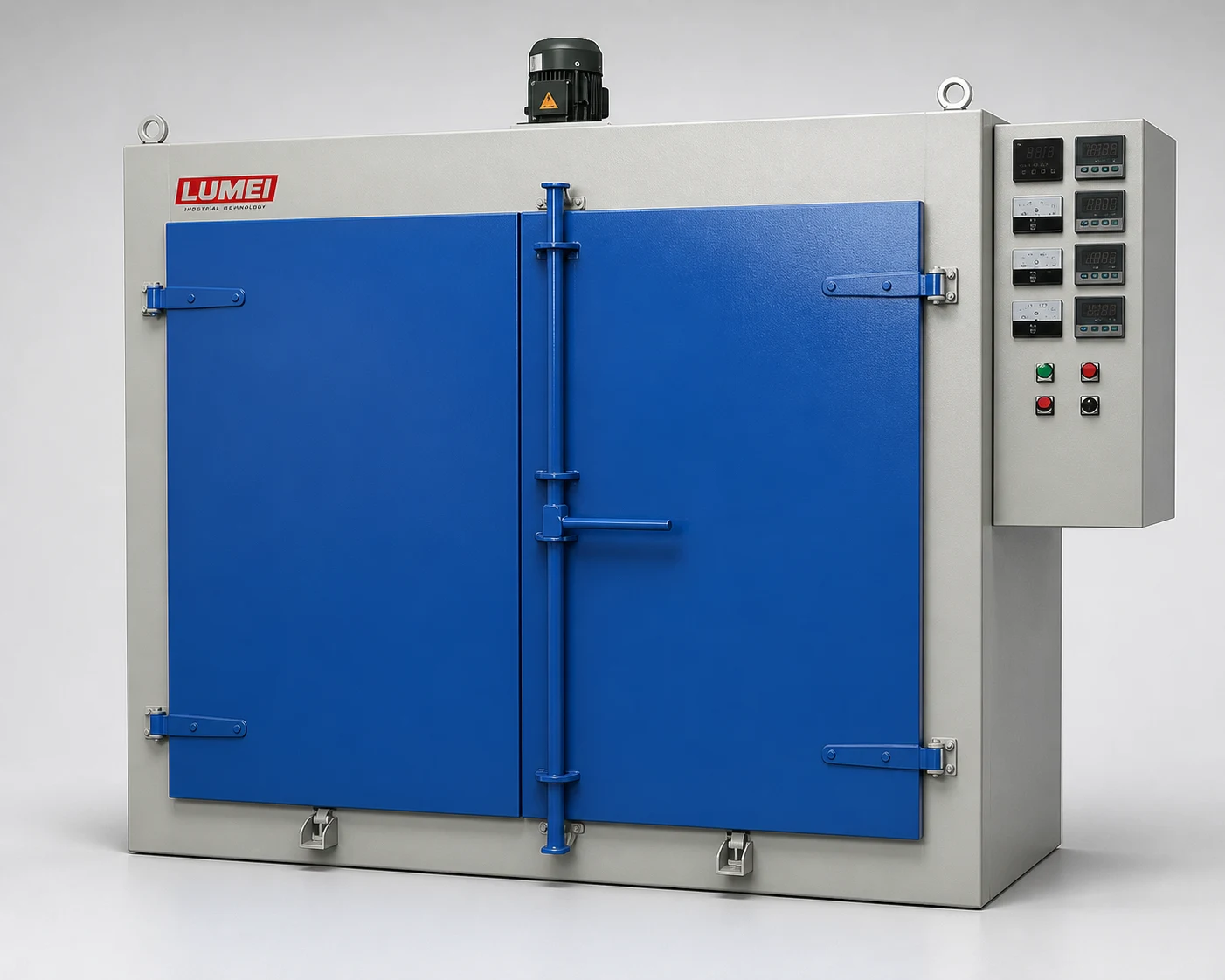
The LUMEI electric hot-air circulation oven is used for hardening resin-bonded grinding wheels and curing flexible grinding discs, with fans circulating hot air. Suitability for a particular product should be confirmed against the model documentation, loading plan and trial results.
4. Align soak timing with the process documents
The instruction “start timing when the temperature is reached” needs a more precise definition: which measurement point must meet which condition, and which period then starts?
If operators time the cycle using the display while the process requirement refers to product temperature, interpretations may differ.
Define the criteria for heating, soaking and cooling before the trial. Where production is controlled by oven-air temperature, verify that the control profile gives the product the required thermal treatment under the agreed loading conditions.
Temperatures, times and permitted deviations should come from the applicable product process documents and validation results. Profiles used for other formulations or sizes can inform an investigation, but must not be adopted for production without confirmation.
5. Keep samples traceable to their oven positions
If all samples are mixed together for inspection after the trial, the link between temperature records and product results can be lost.
Plan sample identification in advance and relate sample positions to the measurement points and racks. After unloading, inspect dimensions, appearance and relevant performance according to the product requirements, then analyze the findings alongside the temperature curves.
For example, if samples from one area show an abnormality, first review that area’s temperature record and loading conditions, then examine materials, forming and other operations. Position traceability helps narrow the investigation; the location of an abnormality alone does not prove that the oven caused it.
Temperature records meeting the agreed requirements cannot replace finished-product inspection. Keep separate results for equipment operation, process execution and product testing. When preparing samples and evaluation items, consult the trial production and validation service information; the specific scope and test conditions require separate discussion and confirmation.
6. Discuss capacity using the complete production cycle
An oven enquiry should specify the intended products, batch size, loading method and production schedule, as well as operating temperature.
Capacity calculations should include actual equipment occupancy for loading, heating, soaking, cooling and unloading. Avoid estimating daily batches from soak time alone.
If materials release volatile substances during processing, inform the supplier so that exhaust requirements and equipment suitability can be assessed. Operate the exhaust according to the confirmed equipment and process requirements.
When planning cutting disc production operations and equipment, calculate curing batches, forming time and product handling together to confirm how the stages connect.
For a LUMEI grinding wheel and cutting disc production line, technical discussions can begin with a defined trial task: which products will be made, how they will be loaded, which process will be used, which temperatures will be recorded and how unloaded samples will be inspected.
Trial conclusions apply only to the validated products, loading arrangements and process conditions. Significant changes in product specifications, load quantity, rack layout or the process profile should trigger an assessment of whether revalidation is needed.