 EN












Can You Start a Grinding Wheel Factory Without Manufacturing Experience? People and Technical Preparation Before Production
Published
New to abrasive disc manufacturing? Define process, operation, maintenance and quality responsibilities, then check documents, training, inspection resources and trial records.
Equipment configuration and manufacturing support
Discuss the configuration against your product and site requirements.
Discuss this requirement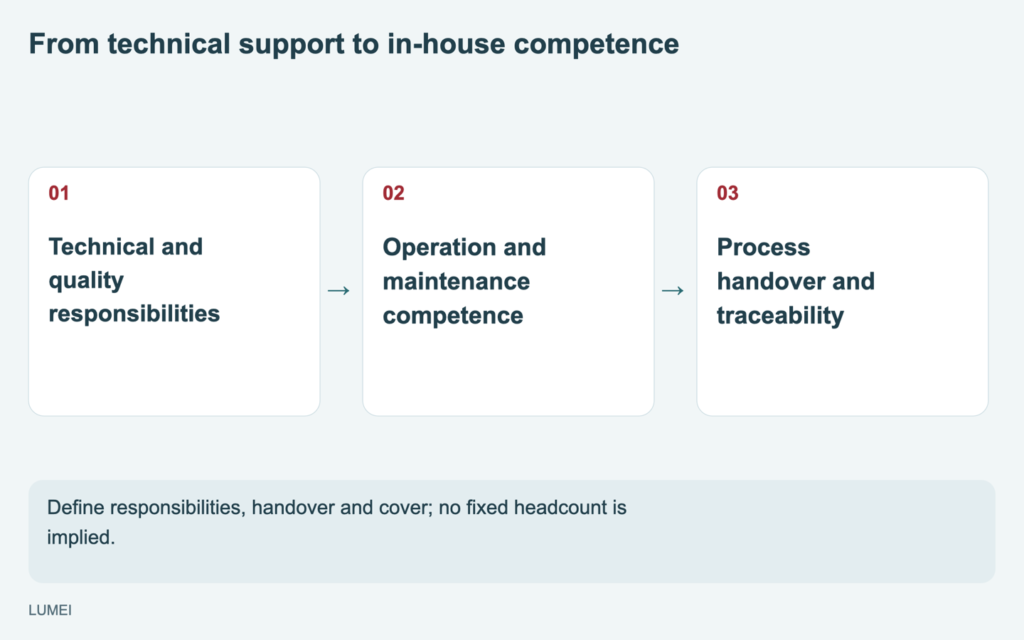
Without grinding wheel manufacturing experience, you can begin project assessment and team development. Readiness for production, however, depends on staff competence, process documentation, site conditions and product validation. The investor need not personally perform every technical task, but the business needs people who can judge material suitability, implement processes, handle deviations and determine the basis for product release.
For a first-time investor, a more useful question than “Can the equipment supplier teach us?” is: After the supplier’s engineer leaves, can our team organize production using the approved documents, recognize where work must stop when a deviation occurs, consult the right records and identify who makes the decision?
This article concerns reinforced resin-bonded cutting discs and resin-bonded grinding discs. It does not provide universal formulations, process settings or staffing numbers. If the initial product range is still undecided, first consult the grinding wheel production investment guide, then use the responsibilities below to identify staffing and technical gaps.
1. Establish responsibilities before deciding headcount
Having someone who understands machinery does not establish a functioning production organization. Equipment maintenance, material processing and product inspection address different problems; a job title alone does not demonstrate that all required competence is available.
The following responsibilities are suggested for the factory preparation stage. They do not require seven separate positions or seven people. Assess staffing against automation, shifts, product variants, handling methods and local employment and site-management requirements. When combining roles, check concurrent tasks, absence cover and authority to review process changes and product release.
| Responsibility to define | Main issue addressed | Preparation or confirmation needed |
|---|---|---|
| Project and production coordination | Who connects products, equipment, materials and trials, and follows up open issues? | Initial product list, owners, handover points and open-issue log |
| Materials and process management | How do materials match the product, and which document versions govern mixing, forming and curing? | Available process documents, technical support arrangements, change and trial records |
| Equipment operation | Can staff perform authorized work to instructions, recognize alarms and record deviations? | Equipment-specific training, work instructions and competence records |
| Equipment and tooling maintenance | Who assesses faults, tooling problems and maintenance tasks? | Maintenance responsibilities, equipment/tooling documents, spares and external service contacts |
| Quality inspection and release | What is inspected, how is it assessed, and how are pending and nonconforming products handled? | Inspection plan, testing resources, status identification and release-review authority |
| Materials and batch control | Can raw materials, mixes, pressed blanks, furnace loads and finished products be linked? | Batch identification, handover records, storage and pending-inspection controls |
| Site safety and occupational health | Are machine guarding, material use, working conditions and personnel requirements addressed? | Measures and owners confirmed against material safety information, equipment instructions and local project requirements |
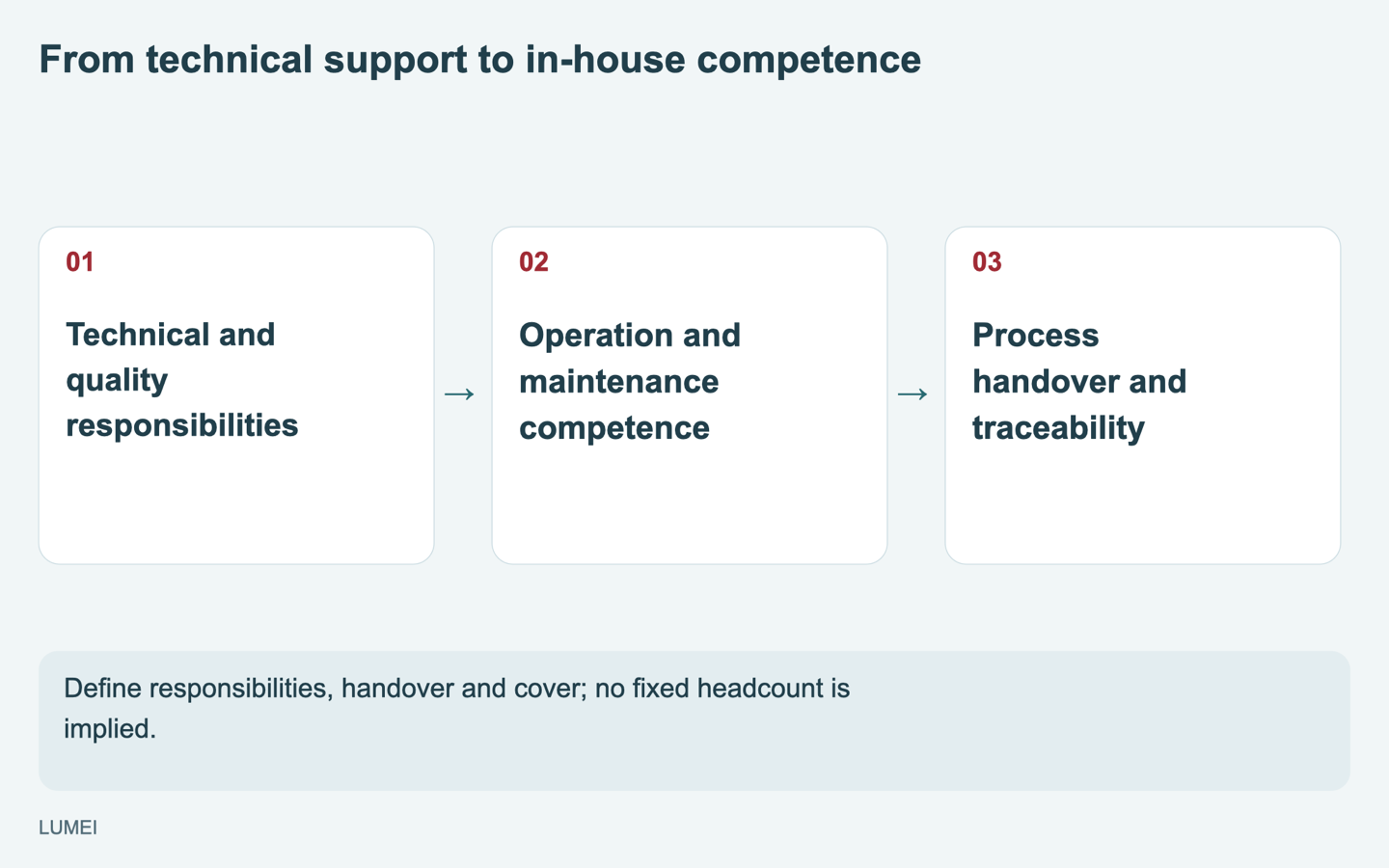
Before all staff are appointed, identify which skills will come from recruitment, internal development or external support. External specialists may contribute technical work, but an internal owner should receive documents, arrange implementation and follow up issues, so project knowledge is not held only in a supplier engineer’s messages.
If the whole team lacks resin-bonded abrasive manufacturing experience, first arrange process support that can participate throughout the project and identify who owns inspection planning and quality decisions. Use this to plan operator and maintenance recruitment and training. Support may come from an employee or an agreed external team. Relevant manufacturing experience and participation in trials, problem analysis and document handover matter; general mechanical repair experience alone does not establish materials and process competence.
When assessing a candidate or service provider, ask about a comparable product: how were material and process versions confirmed, what manufacturing problems arose, what records informed retesting, and what would be handed over before support ends? Shareable work records or explanations help assess relevance without requesting another business’s confidential formulations.
2. Prepare usable process documents, not just a formulation sheet
A table of material proportions alone cannot establish that a product can be manufactured consistently. Material grades, calculation bases, product structure, equipment/tooling, operating conditions and inspection results need to correspond.
For example, state whether an additive proportion is based on abrasive mass or total mix mass. Without that definition, copying the same numbers may produce different batching instructions. LUMEI’s process and material support page also states that specific formulations and process settings require trials, testing and technical confirmation.
For the initial products, prepare the following information and identify whether each item is proposed, awaiting validation or confirmed:
- Product requirements: use, dimensions and construction, workpiece, marking and applicable quality requirements. Customer samples are useful inputs but should be translated into checkable technical requirements.
- Material information: names, grades/specifications, supply batches, available technical and safety documents, storage and use conditions. A shared material name does not justify carrying over previous conclusions after changing the source or grade.
- Process documents: weighing and mixing bases, forming and tooling requirements, curing and cooling requirements, and records needed at each stage. No universal pressure, temperature or time settings are prescribed here.
- Inspection documents: items, methods, sampling, acceptance requirements and record formats, including identification of pending, nonconforming and released status.
- Version and change records: who proposes and reviews changes, affected batches, additional validation and the point at which the revised version may be used.
Not every document must be final at project inception, but unresolved items should enter an issue log. Equipment selection can progress; unvalidated settings must not be represented as established production capability. Use the resin-bonded cutting disc manufacturing process to check interfaces between stages.
3. What supplier training covers—and what the team must retain
Equipment training generally addresses operation, controls, maintenance, fault finding and safety for specific machines. It contributes to competence but does not, by itself, complete formulation matching, product performance validation or production-line management.
Select trainees for their continuing operating, maintenance and internal handover responsibilities, rather than simply their availability to travel. If training documents or the engineer’s language differ from those used on site, arrange interpretation, terminology checks and document handover in advance.
Training can include demonstrations and record review. Under confirmed safe conditions and within authorization, trainees perform agreed normal tasks to the documents, while the trainer records observations and gaps. Review deviation handling through existing records and scenario questions, identifying matters reserved for designated technical staff.
| Check after training | Confirmation more useful than course attendance |
|---|---|
| Can the person perform the assigned work? | Under confirmed conditions and authorization, perform agreed tasks to the applicable instructions; the trainer records observations and remaining practice needs |
| Can the person find the applicable documents? | Identify current work-instruction versions for equipment, tooling and products, and know who resolves conflicts |
| Can production information be recorded? | Link operating records to material, product and process batches, rather than recording only total output |
| Are operating limits understood? | Explain authorized adjustments and deviations requiring stoppage, product segregation or technical intervention |
| Can work be handed over? | The next shift can identify the batch, open deviations and product status from the records |
| Is the support route understood? | Assemble equipment identification, alarms/deviations, timing and checks performed for the appropriate support contact |
LUMEI’s installation training and after-sales information describes equipment training and onsite support. Confirm participants, equipment/product scope, languages, deliverable documents and costs for the project. “Training provided” does not imply that all factory-development technical work is included.
4. Arrange inspection capability before the first batch exists
During equipment selection and trial planning, technical and quality staff should define the required inspections and where they will be performed. Appearance, dimensions, cutting/grinding performance and applicable product safety tests serve different purposes and cannot replace one another. Conforming pressed-blank dimensions do not establish that the cured product conforms.
Assess which inspections will be performed in-house and which by a competent external organization. For external testing, check that its capability and reports suit the product and sales market, and arrange sampling, test lead time and report return. A possible future testing arrangement is not a currently available inspection capability.
Define who reviews results, how reports link to batches and where products remain while results are pending. Otherwise, a trial may leave apparently normal products without a defensible release decision.
Inspection documents should allow the next person to establish the product identity, inspection basis, sample batch, result, reviewer and current product status.
5. Use trials to check team continuity as well as machine output
A first trial often concentrates on feeding, pressing, demoulding and intact product shape. An inexperienced team should also check responsibility for process handovers and deviation handling, and whether records support the next stage’s decisions.
The parties’ technical staff can agree representative products, trial scope, sampling and inspection, then retain linked records for materials, mixing, forming, curing and product results. Trial quantities, repetitions and acceptance conditions are project-specific; there is no universal number of trials that establishes volume-production readiness.
Consider this hypothetical readiness-review situation, not a LUMEI customer case: forming staff follow confirmed instructions, but at curing handover only tray numbers exist, with no link to mixing batches. Quality staff also cannot identify the inspection-document version. Batch links and document handover need correction; successful machine output alone does not establish line readiness.
Record three types of trial-review conclusions: conditions verified and their applicable scope; issues requiring correction and retesting; and matters with insufficient information. After material, tooling or process changes, the responsible staff should determine affected batches and revalidation needs.
When discussing trial production and validation, agree input information, evaluation items and record delivery first. Results apply to the actual products and conditions tested, not automatically to volume production of every size.
6. Separate an assigned owner from a confirmed condition
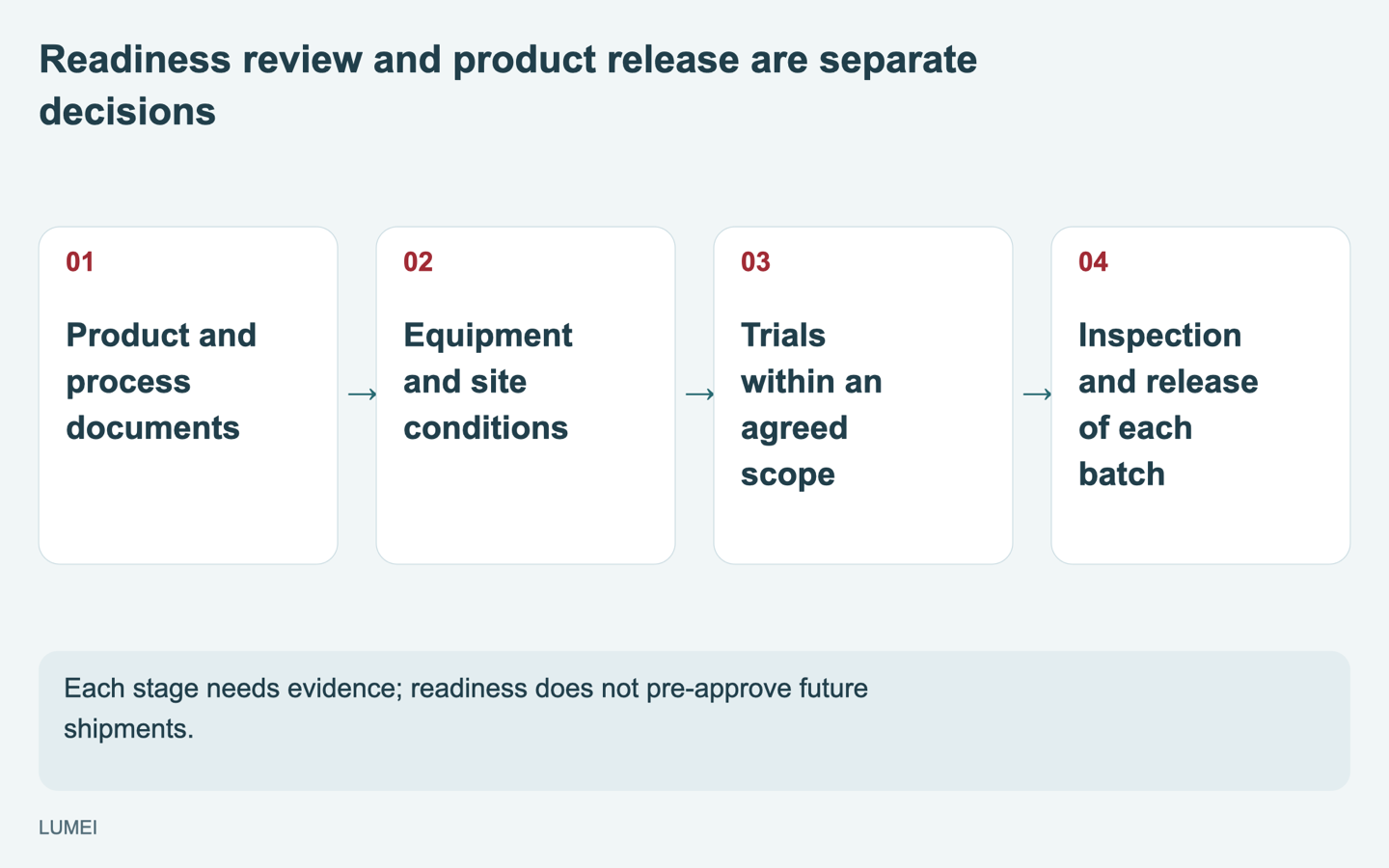
A staff list identifies an owner, not completion. Before trials, prepare a concise condition register with owners, evidence and unresolved issues. Equipment arrival, readiness for trials, and readiness to produce and release within agreed limits require separate decisions.
For each item below, add an owner, target date, current status and evidence reference. Status may be “to prepare”, “to validate” or “confirmed”; a confirmed entry should state the applicable product, equipment and process conditions. This identifies both follow-up responsibility and the basis for the decision.
| Review item | Evidence or conditions to check | Typical unresolved issue |
|---|---|---|
| People and handover | Key responsibilities assigned, competence confirmed as agreed, handover and cover arranged | Essential knowledge remains only with temporary external staff, with no internal recipient |
| Product and process | Product defined, document versions identifiable, unresolved conditions recorded | Conflicting versions or unexplained settings in use |
| Equipment and site | Installation, checks and authorized operating conditions confirmed to instructions and project requirements | Guarding, supporting facilities or site-preparation issues remain open |
| Materials and batches | Materials identifiable and process records linked to products | Material, mixing and furnace-load batches cannot be linked |
| Inspection and disposition | Resources available, methods/requirements clear, pending/nonconforming/release authorities defined | Samples exist without an applicable inspection plan or review arrangement |
| Trials and issue handling | Results linked to actual conditions, remaining issues assigned correction and retesting | Untested, unretested or out-of-scope products treated as conforming |
This table supports readiness review; it replaces neither equipment acceptance, product inspection nor required local project procedures. Resolve unconfirmed conditions affecting safe operation, conformity or release decisions before responsible staff decide the scope and conditions of the next step.
Even when people, equipment and inspection resources are ready, each batch still follows the applicable inspection and release requirements. Readiness review establishes whether work can proceed under defined conditions; it does not pre-approve shipment of future batches.
7. Discuss staffing and technical gaps at the first supplier meeting
You do not need a mature process at the first meeting, nor should uncertain information be presented as confirmed. Prepare one page describing intended products, customers/markets, available staff, missing experience and the support requested.
Specify the support: machine-operation training, materials/process discussion, trial preparation or confirmation of inspection records to be delivered. Mark unanswered matters “to be confirmed” and agree an owner and project stage for resolution.
Lack of experience does not prevent project preparation. Begin by building a team able to receive technical information, follow documents, record processes and handle deviations, then establish the production scope through agreed trials and inspection. To discuss a project with LUMEI, use the project enquiry page to describe initial products, location, available personnel and required support, so equipment, materials, training and trials can be considered individually.
Tell us about your manufacturing requirements
Discuss equipment, materials, process and delivery scope.
Submit project requirements →